
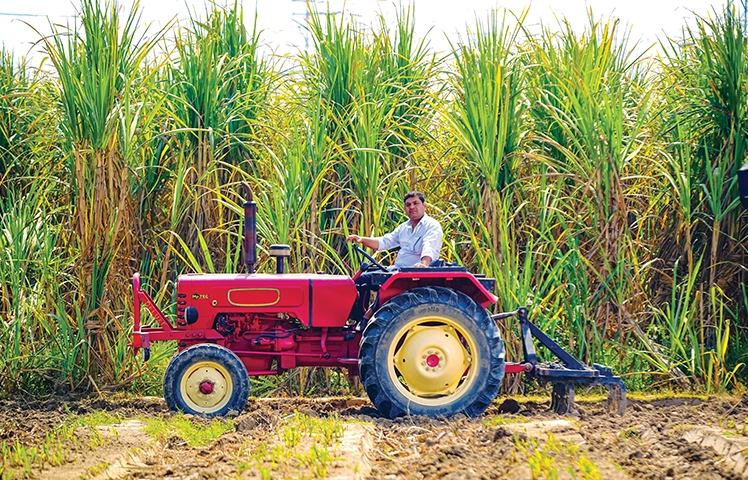
SUGAR BUSINESS
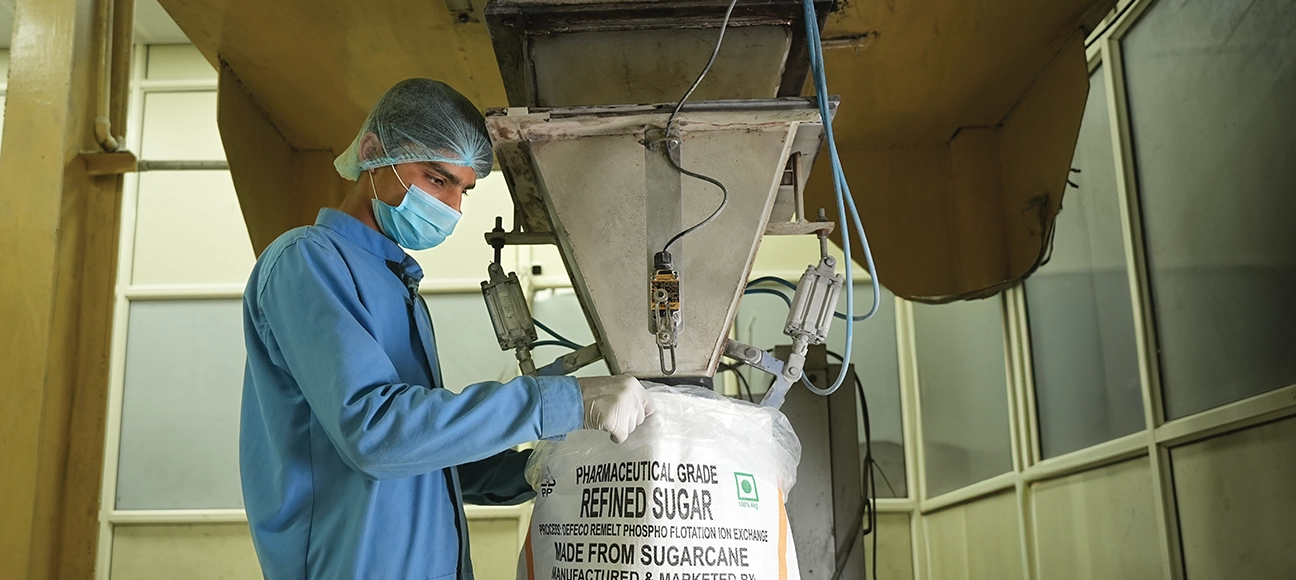
Triveni Sugar Business: Performance
Key financial highlights
The turnover increased by 13% during the year as compared to last year, led by 10% higher despatches and 4% higher average realisation price of sugar. The cost of production of sugar during the second half of FY 26 (H2 FY 26), forming part of the sugar season 2025-26, was higher by ₹ 56/quintal as compared to the similar period last year (H2 FY 25). This was due to the increase of ₹ 30/quintal in the State Advised Price of sugarcane for the season 2025-26, the impact of which was partly mitigated by a 26 basis points increase in sugar recovery.
Despite the increase in the sugarcane price, the PBIT at ₹ 272 crores increased marginally by 2.1% over last year. The contributing factors for the increased profitability were the higher quantum of despatches as well as revision in power tariff granted by the Utar Pradesh Electricity Regulatory Commission, with retrospective effect from 01-04-2024, for the electricity supplied by the cogeneration plants to the State grid.
Historical performance over the sugar seasons
| Particulars | 2016-17 | 2017-18 | 2018-19 | 2019-20 | 2020-21 | 2021-22 | 2022-23 | 2023-24 | 2024-25 | 2025-26 |
|---|---|---|---|---|---|---|---|---|---|---|
| Area under sugarcane (Ha) | 166675 | 183423 | 194159 | 191840 | 195537 | 198376 | 204092 | 206170 | 214300 | 210892 |
| Sugarcane crushed (LQ) | 640.03 | 836.7 | 797.58 | 874.25 | 853.97 | 840.91 | 932.54 | 825.72 | 904.78 | 825.60 |
| Sugar produced (LQ) | 70.8 | 95.2 | 94 | 100.9 | 93.8 | 88.8 | 95.4 | 89.0 | 91.6 | 91.3 |
| Net Recovery (%) | 11.06 | 11.38 | 11.79 | 11.54 | 10.98 | 10.55 | 10.23 | 10.78 | 10.13 | 11.06 |
| Gross Recovery (%) | 11.06 | 11.38 | 11.79 | 11.97 | 11.86 | 11.7 | 11.47 | 11.49 | 10.80 | 11.06 |
*Includes performance of Shamli unit from season 2024-25, post Sir Shadi Lal Enterprises Ltd. becoming a subsidiary of the Company w.e.f. June 20, 2024.
Operations during Sugar Season 2025-26
The sugarcane crushed during the season 2025-26 at 825.6 lakh quintals, witnessed a decline of 8.8% over the previous season. This was due to lower yields, primarily in West Uttar Pradesh, where the majority of the crushing capacity of the Company is located. Various agro-climatic factors including significant diversion of sugarcane to jaggery manufacturers in certain select areas were responsible for the lower crush. However, the crush drop differential at the Company’s mills in each of the zones was lower than the State averages:
| Zone | Overall increase / (decline) in sugar cane crush in the State (Season 2025-26 vs Season 2024-25) | Company’s Sugarcane crush performance | ||
|---|---|---|---|---|
| Season 2024-25 (lakh qtls.) |
Season 2025-26 (lakh qtls.) |
Increase / (Decline) | ||
| West | (-) 17% | 633 | 546 | (-) 14% |
| Central | (-) 6% | 200 | 202 | 1% |
| East | 0% | 71 | 78 | 9% |
All the eight sugar mills operated on the C-Heavy molasses process, since the economics favoured such production, based upon the prevailing / expected realisation prices of sugar. The gross recovery of sugar during the season 2025-26 stood at 11.06%, higher by 26 basis points as compared to gross recovery of the previous season. However, since the previous season’s operations were partially carried out on B-Heavy molasses process, the net recovery of sugar in the current season is higher by 93 basis points compared to the previous season, after considering the quantum of sugar excess diverted in B-Heavy molasses.
Accordingly, despite the decline in sugarcane crushed, the Company produced almost similar quantity of sugar during the season 2025-26 at 9,13,086 tonnes as compared to 9,16,060 tonnes during the previous season.
Sugar-unit wise operational details
| Crush (Lakh Quintals) | Net Recovery % | Sugar Production (Lakh Quintals) | ||||
|---|---|---|---|---|---|---|
| Sugar-Unit | SS 24-25 | SS 25-26 | SS 24-25 | SS 25-26 | SS 24-25 | SS 25-26 |
| Khatauli | 250.8 | 207.8 | 10.11 | 11.00 | 25.4 | 22.9 |
| Deoband | 179.9 | 136.2 | 9.87 | 11.11 | 17.8 | 15.1 |
| Ramkola | 71.2 | 77.7 | 10.54 | 10.86 | 7.5 | 8.4 |
| Sabitgarh | 116.9 | 121.2 | 10.53 | 11.51 | 12.3 | 14.0 |
| Chandanpur | 84.8 | 83.3 | 10.01 | 11.31 | 8.5 | 9.4 |
| Rani Nangal | 60.9 | 66.3 | 10.25 | 11.30 | 6.2 | 7.5 |
| Milaknarayanpur | 54.5 | 51.9 | 9.73 | 10.78 | 5.3 | 5.6 |
| Shamli | 85.8 | 81.2 | 10.12 | 10.41 | 8.7 | 8.5 |
| TOTAL | 904.8 | 825.6 | 10.13 | 11.06 | 91.6 | 91.3 |
Operational Highlights
- The company achieved the No. 1 position in nominal recovery in the State, outperforming groups operating solely on C-Heavy (CH) processes.
- Achieved 3rd best performance amongst all the leading sugar manufacturing groups in the State in terms of comparative sugarcane crush over the previous season, despite steepest decline in the State being witnessed in West U.P., where the major crushing capacity of the Company is located.
- Khatauli unit was the only unit in the State to cross sugarcane crush of 200 lakh quintals.
- Sugar production maintained at last season’s levels, contrasting with an overall 3.4% average decline in the State.
- Superior realisations were achieved through excellent sugar quality and product mix.
- Strict cost monitoring led to a reduction in costs
- Continued strong focus on the proper storage of sugar, molasses, and bagasse to minimise deterioration during storage and maximise realisation/profitability.
Operational Efficiency:
- Maintained operational excellence despite challenges from transitioning to pure C-Heavy operations this year, which typically results in higher steam consumption and lower crush rates compared to last year when the sugar units had operated on both, C-Heavy and B-Heavy operations.
- Undertaken various targeted capital expenditures for incidental reduction in process steam consumption. This involved the Khatauli, Chandanpur and Rani Nangal units where specific interventions were made to bring down the steam consumption which showed very encouraging results in sugar season 2025-26. Ramkola unit achieved lower process steam consumption due to a higher crush rate.
- Conversion of the extraction-cum-condensing type to backpressure type turbo-generator set at Deoband unit. to enhance bagasse savings showed very encouraging results during the sugar season 2025-26.
3rd best performance
amongst all the leading sugar manufacturing groups in the State
Superior Sugar Quality, Product Mix
- Product Mix Focus: Maintained a strong focus on producing superior quality sugar, leading to superior realisations.
- Produced a higher quantum of lower ICUMSA sugar at Khatauli unit targeted towards institutional clients.
- Achieved a higher percentage production of smaller grain pharma sugar grades.
- Higher percentage of large grain size sugar production at Shamli unit (~7% higher over the previous year).
- Superior grain consistency achieved at Ramkola unit.
Cane Development & Disease Management
The Company maintains its strong focus on cane development and considers it as one of the key differentiators with its peer companies. In view of spread of red rot in star performing variety (0238), the Company has undertaken a massive varietal substitution programme especially in those units which were/are more vulnerable. The replacement plan is virtually complete in vulnerable units and at other units, the programme is being sustained to reduce dependency.
The Company is also focussing on extensive farmer engagements across each of its eight sugar units and has developed large number of demo plots for spreading/showcasing best agronomic practices for getting higher yields with lower inputs.
Integrated pest and & disease management programme is continued with much more focus and with targeted interventions wherein rare/minor pests are also being covered.
Artificial Intelligence (AI) & Digitisation Initiatives
The Company continues to leverage AI and digitisation for crop health management, agronomic practices as well for cane procurement logistics through the following initiatives:
AI “Ganna Doctor”
A mobile AI application in the validation/rollout phase that identifies crop diseases instantly via field photos sent by farmers/supervisors and provides immediate remedial recommendations. Leverages satellite imagery for targeted interventions.
AI-driven precision agriculture
Pilot project underway at Sabitgarh and Deoband in collaboration with ISMA and Baramati KVK, using AIML and IoT to provide tailored agronomic recommendations for sustainable farming.
AI-Powered Camera for Centre Monitoring
Proof of Concept successfully completed at two centres in Sabitgarh. Solar-powered AI cameras enhance real-time visibility, optimise logistics, and monitor cane balances at procurement hubs.


ALCOHOL BUSINESS
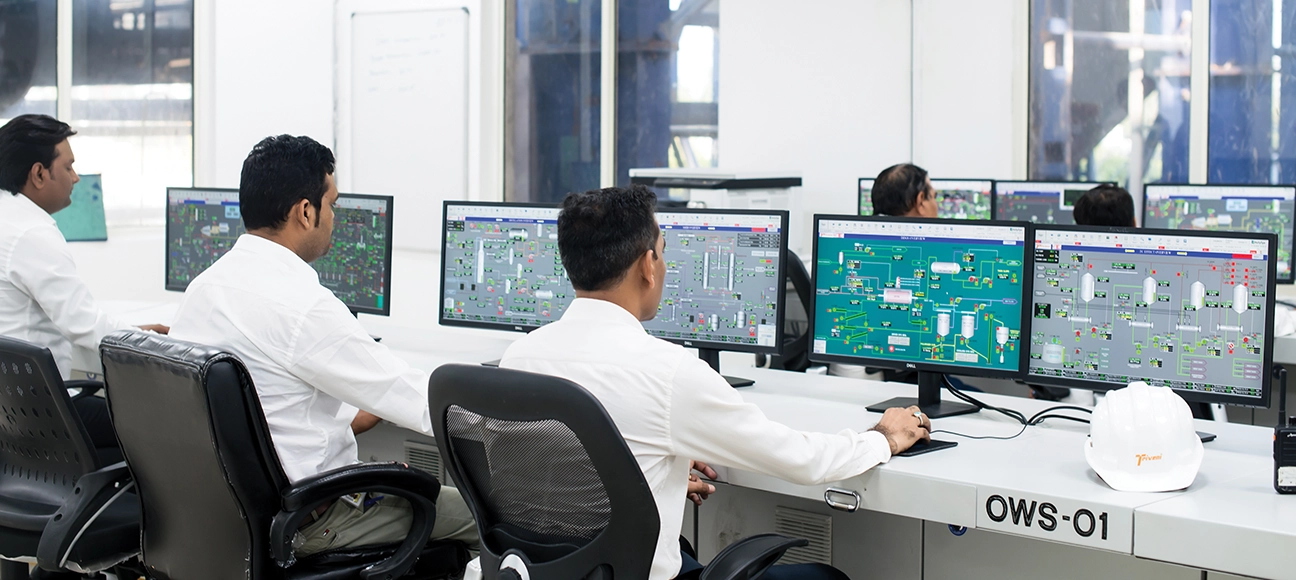
Triveni Alcohol Business: Performance
Turnover of FY 26 was higher by 5% as compared to the previous year, on account of higher alcohol despatches, which were higher by 11,885 KL i.e., 6% over the previous year. While average realisation prices shifted slightly lower to ₹ 61/litre due to a higher mix of FCI rice-allocated ethanol – which carries lower relative pricing than maize – the volume growth more than compensated for the variance. Overall turnover growth was also contributed by the alco-beverages, with the IMIL business registering a volume growth of 6% at 58.9 lakh cases.
The increase in production and sales during the year is attributable to far better availability of feedstocks, as well as on account of the full year operations of the multi-feed distillery at Rani Nangal, which was commissioned during the previous year.
The profitability (PBIT) witnessed an increase of 200% over the previous year, higher by ₹ 79.6 crores. The increase is attributable to the higher turnover, reduction in the procurement cost of maize, improved operational performance owing to better feedstock availability and cost optimisation. The higher realisation price of DDGS (by-product), also contributed to the increase in profitability.
The Company has tied-up aggregate allocation of 17.18 crores litres of ethanol under Cycle-1 of OMC tender and with Private OMCs. Additionally, the Company shall also utilise around 1.8 crores litres of ENA for production of potable alcohol. The Company expects further allocation in the subsequent cycle.
Key operational highlights of alcohol business performance FY 26
- Achieved highest-ever production and sales volume during FY 26;
- Recoveries in both molasses and grain distilleries were better than or at par with the previous year;
- Focussed approach on improving the quality of DDGS;
- Continuous initiatives are focussed on enhancing efficiencies and optimising costs, particularly in enzyme usage, fuel consumption, repairs & maintenance spends, personnel & administration costs etc.:
- Reduction in bagasse consumption in the incineration boiler at the molasses-based distillery at Muzaffarnagar, through increased consumption of slop;
- Internal debottlenecking at the grain-based distillery at Muzaffarnagar to increase production from maize and reduction in power consumption by ~2,000 units/day through close monitoring and system improvements;
- Fermentation efficiency at Sabitgarh distillery improved through effective utilisation of enzymes and process optimisation;
- Chemical consumption at Rani Nangal & Milaknarayanpur distilleries has been reduced through process optimisation measures and improved fuel efficiency has led to lower consumption of bagasse.
- Growth in IMIL volumes significantly outperformed the industry despite aggressive competition, securing a position among the top five players in Uttar Pradesh.
POWER TRANSMISSION BUSINESS
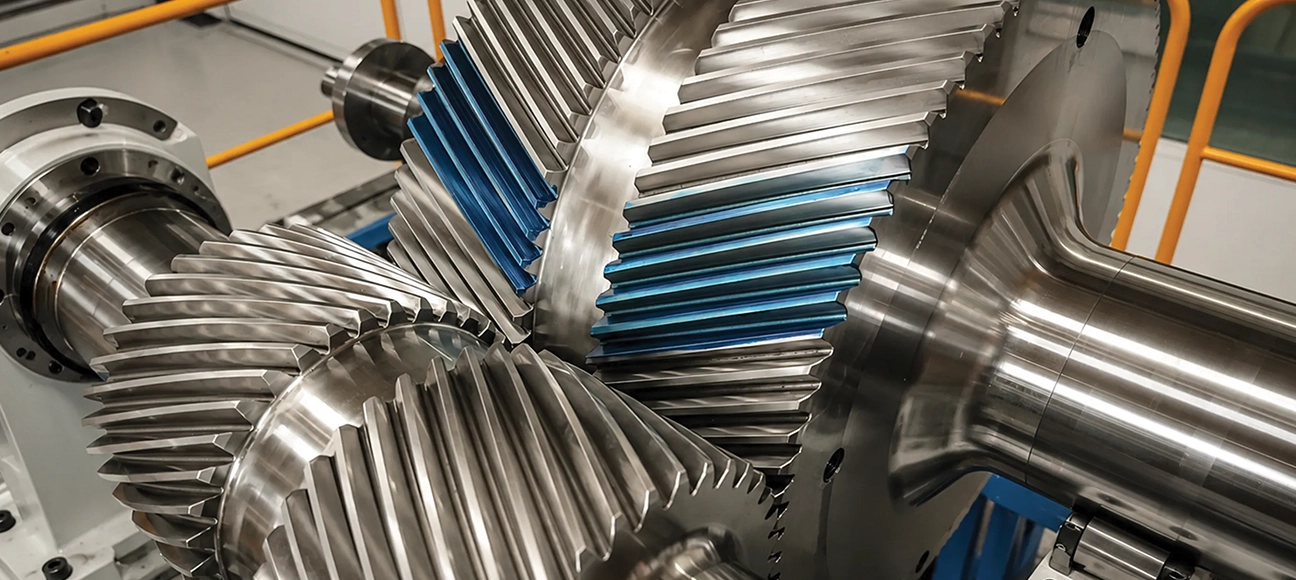
Triveni Power Transmission Business: Performance
PTB witnessed a moderate decline in revenue (8% YoY), primarily due to temporary moderation in order finalisation cycles, driven by delays in award of contracts by end-users impacting EPC players and OEMs. Order Booking during the year remained resilient at ₹ 467 crores, reflecting sustained demand across key segments. The order position grew by 25% to ₹ 485 crores (including long-tenure orders of ₹ 247 crores), providing strong revenue visibility.
PTB continues to maintain a dominant position in the domestic high-speed gearbox market, supported by:
- Strong engineering and design capabilities
- Fully integrated manufacturing infrastructure
- Established relationships with global OEMs
- Proven execution track record in critical applications
Gears Business:
New Product:
PTB proven performance in high power and critical applications has strengthened OEM relationships resulting in expanding footprint across global projects. PTB’s closer to customer initiative by starting operations from European office has increased our customer connect and acceptance.
Domestic Market Highlights
- The domestic market saw marginal growth in order bookings, driven primarily by the Steam Turbine Generator (STG) segment. The average order value increased due to shift in higher power
- High Power gearboxes > 30 MW - Total supplied is more than 22 nos., out of which 17 nos. are above 48 MW.
- Built to Print segment – mainly from IGC. First qualification order for a larger diameter gearset received, utilising the expanded manufacturing facility
- Few OEMs are planning to localise higher capacity IG compressor in India. This will increase the opportunity for business for PTB
WATER BUSINESS
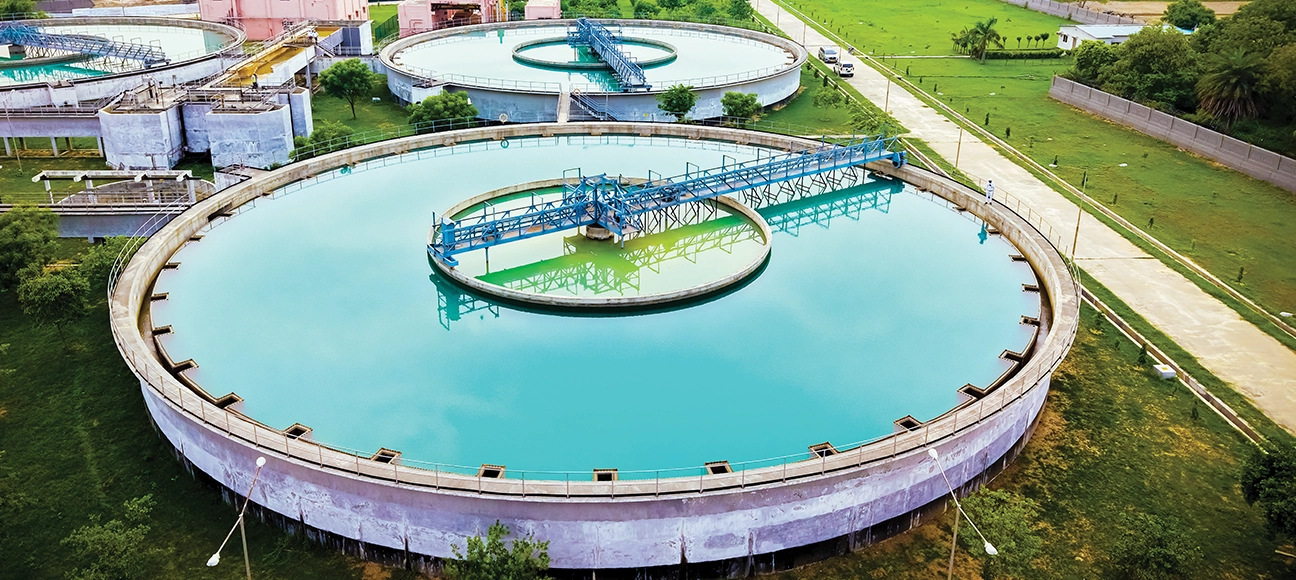
Triveni Water Business: Performance
The Water Business demonstrated improved execution momentum inflows during the year.
- Revenue increased driven by efficient execution.
- Revenue stood at ₹ 268.51 crores, higher by 15% year-on-year.
- PBIT stood at ₹ 31 crores, lower by 5% year-on-year.
- Total order booking during FY 26 was ₹ 165 crores, including EPC orders of ₹ 125.84 crores.
- The total order book as of March 31, 2026 stood at ₹ 1,503 crores, including a significant portion from long-term O&M contracts.
The business continues to strengthen its position in recycling and reuse, with projects such as Balotra (18 MLD ZLD) and Pali (12 MLD ZLD) project for textile effluent, Bhiwadi (6 MLD ZLD) for mixed use industrial effluent, and 42 MLD sewage recycling at Vadodara, along with projects in Mathura at various stages of execution and O&M.
Internationally, the Maldives project covering six islands has been completed and handed over, including the defect liability period. The Bangladesh project under ADB funding has achieved substantial progress.
Ongoing O&M engagements include major installations such as CETPs and ZLDs at Bhiwadi and Balotra, desalination plants, and large STPs and WTPs across multiple locations.
Key achievements during the year
- Successful completion and handover of EXIM Bank-funded Maldives water and sanitation project (Package 6) for 6 islands
- Order secured for 7.2 MLD ZLD plant from Ramagundam Fertilisers & Chemicals Ltd.
- Significant progress in ADB-funded Bangladesh STP projects
- Continued execution and O&M of large municipal and industrial treatment facilities, including CETPS & ZLDs at Bhiwadi & Balotra, desalination plants for Barmer Lignite, 204 MLD STP in Delhi, 210 MLD WTP in Greater Noida.